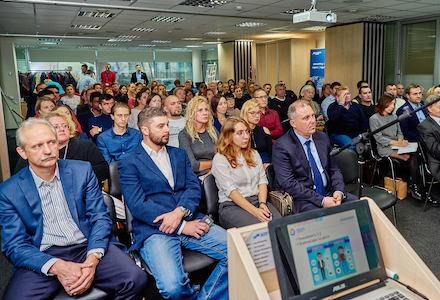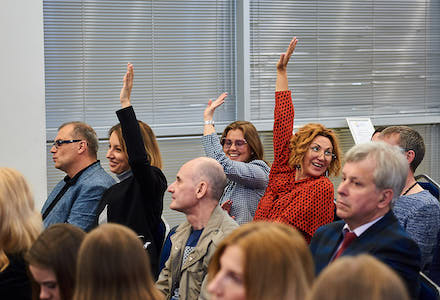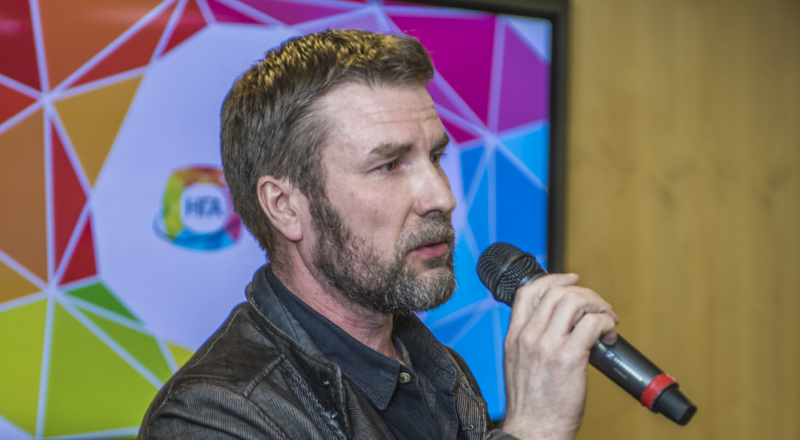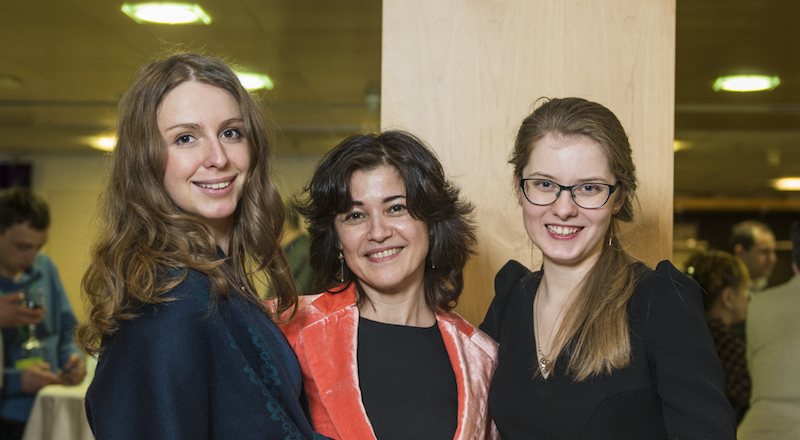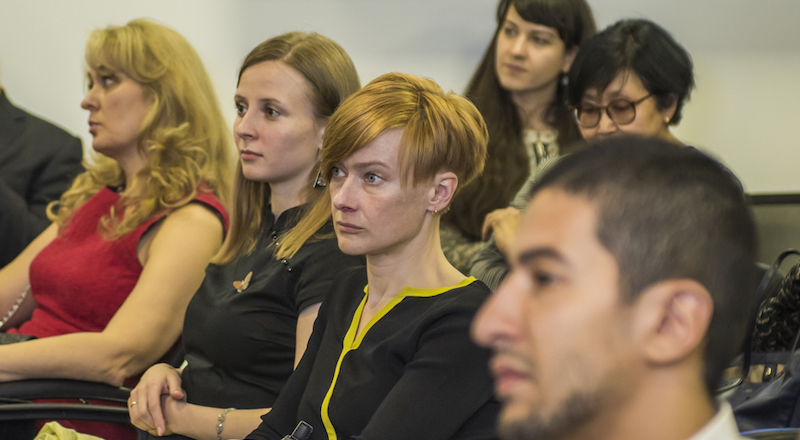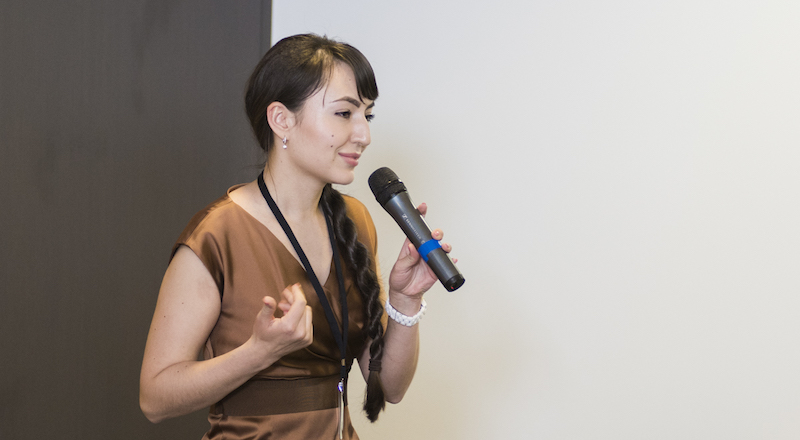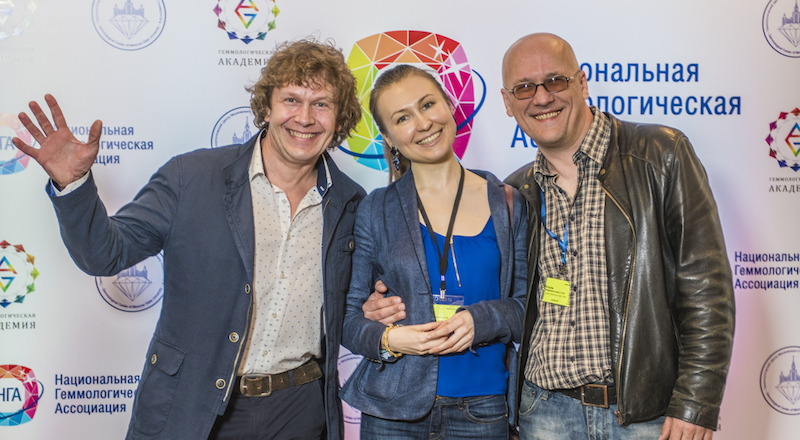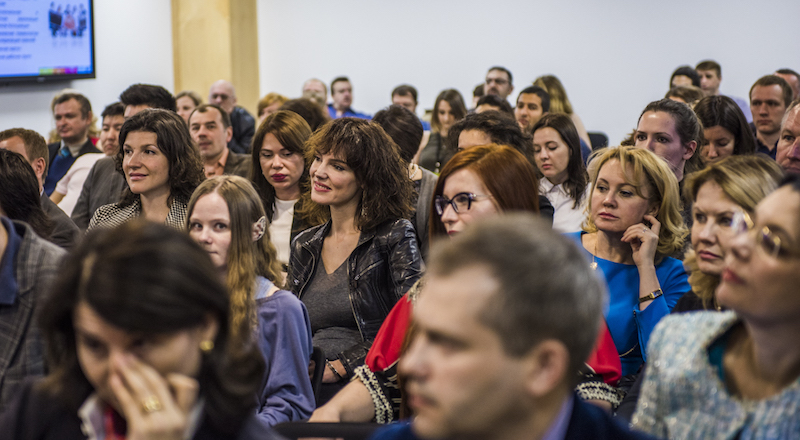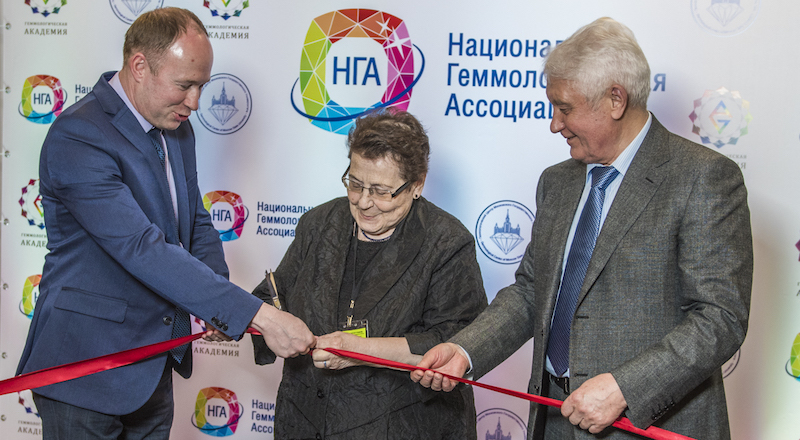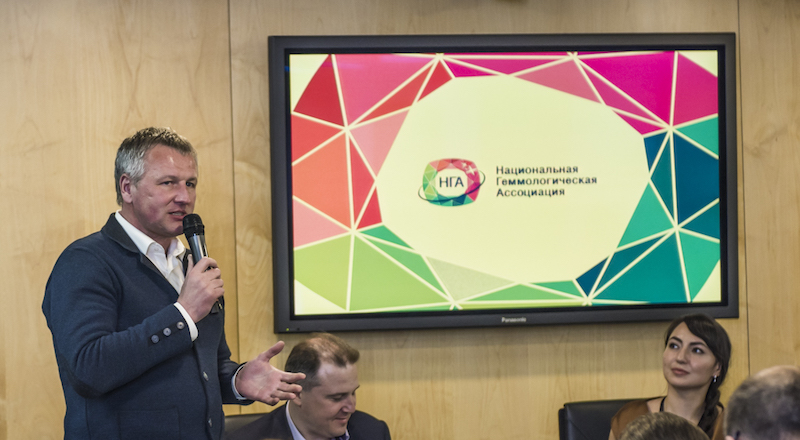
On April 25, 2016, a ceremonial event was held to mark the establishment and commencement of operations of the National Gemological Association.
Three months earlier, on January 26, 2016, at a meeting of the GemCenter of Moscow State University Alumni Club, a decision was made to transform the Club into a professional community – the National Gemological Association.
On that day, a new professional community was born, one that would unite specialists to advance the field of gemstone knowledge and its popularization, and to promote gemology at both the national and international levels. At present, it is crucial for the NGA to develop its own unique format – one that enables representatives of science and business to find common ground within the Association. Accordingly, membership is open to business professionals, academics, jewelers, gemologists, and gemstone enthusiasts alike. By the time of the official launch, the Association’s membership had already exceeded 200 individuals. The Association remains open to all who wish to pool their efforts in the field of gemology.
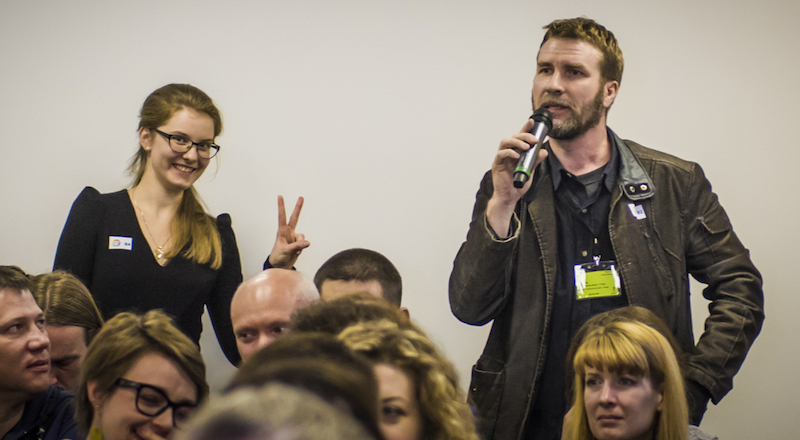
The Association’s inauguration was attended by professionals from the gemstone and jewelry industries, who voiced their support for the idea of creating the community and shared their vision for the NGA’s future work. During the event, participants discussed the various directions the Association could pursue. In the near term, one of the primary objectives of the National Gemological Association will be the development of a growth strategy, or “roadmap,” for the gemological community – a document that would provide a clear vision for the future trajectory of gemology. A working group will be established to draft this roadmap, which will then be open for discussion by all community members.
Another key area of development is the creation of a Continuing Professional Development (CPD) system, which the Association could offer to its members. This represents a unique opportunity for professional growth for community members who have already completed foundational gemology courses. The Association is open to developers of proprietary courses, trainers, and experts wishing to share their knowledge. In addition, participants discussed the idea of launching a dedicated publication for the gemological community, as well as a corporate web portal.
The Association has already begun active work in the area of international cooperation: a memorandum of cooperation has been drafted with the Gemmological Association of Hong Kong; a webinar hosted by the Gübelin Academy is planned for June of this year; and ties have been established with specialists from other countries who visit Russia, including for open lectures.
A conference held on March 15, jointly organized with the Jewelers’ Guild of Russia, has already yielded tangible results – representatives of the jewelry community have begun to engage more closely with gemologists, discussed pressing industry issues, and signed a resolution based on the outcomes. Looking ahead, collaboration with the Jewelers’ Guild of Russia offers the potential for the Association to participate in shaping industry standards and refining the regulatory framework.
According to Alexander Stolyarevich, Head of the GemCenter of Moscow State University Laboratory, the Association’s prospects lie in its ability to facilitate communication among gemologists working in different laboratories, as the NGA can serve as a channel for information exchange. At the same time, the GemCenter Laboratory is prepared to share its accumulated expertise, as its specialists regularly encounter both new market developments and emerging diagnostic technologies. In the speaker’s view, the Association could in the future engage in discussions on various standards and help convey verified information to a broad consumer audience.
In his address, Maxim Viktorov, Deputy General Director of the Moscow Gemological Laboratory (MGL), emphasized that trust is the cornerstone of doing business in the gemstone and jewelry industry – a trust that MGL upholds daily through its state-of-the-art equipment and instrumentation. Within the framework of the Association, Viktorov proposed harmonizing the work of laboratories and creating a unified database of gemologists to facilitate collaboration and the resolution of complex challenges.
“Creating favorable conditions for doing business, shaping the regulatory and legal framework, and – most importantly – promoting our product category, which unites both jewelers and gemologists, are extremely relevant priorities,” noted Eduard Utkin, General Director of the Jewelers’ Guild of Russia Association. In his view, it is essential to form alliances that enable cooperation and the advancement of shared ideas and projects.
Tatiana Olifirova, Chairwoman of the Board of Directors of PO Kristall, particularly emphasized that without unification and coordinated efforts to develop the market, progress would be impossible. Discussions also touched on the potential for collaborative action to preserve export duties on rough diamonds, with the aim of jointly defending Russia’s cutting and polishing industry. In addition, the idea of creating a register of expert gemologists was proposed.
Professor Yulia Solodova, Head of the Gemological Institute (NOU), shared her experience and perspective, noting that many cities across the country have strong gemological services and branches of the Mineralogical Society – yet this does not preclude their unification and participation in the NGA. Professor Solodova also observed that the significant number of young professionals joining the Association could bring a modern worldview and cutting-edge approaches, and suggested engaging graduates from various continuing education institutions in the Association’s work.
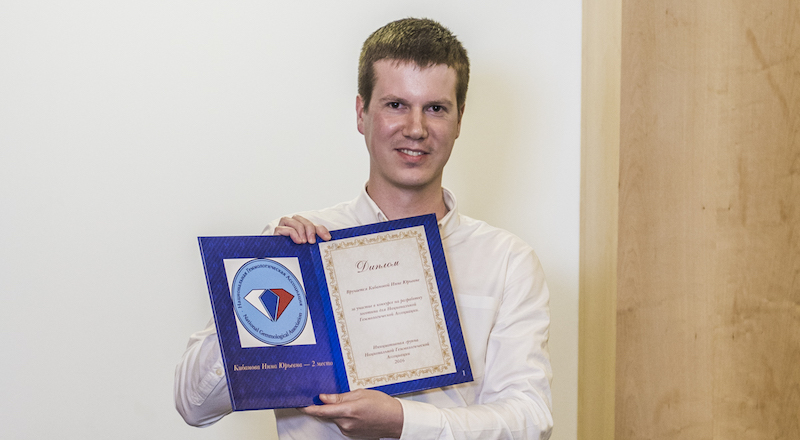
The event also featured the announcement of results and the awarding of prizes to the winners of the competition for the best logo for the National Gemological Association. The winner of the public vote was Anna Petrenko, whose design received over 40% of the votes. Second and third places went to Inna Kibanova (23%) and Roman Serov (18%), respectively. The winning logo was, in the final moments of the competition, proudly placed on the layout of the information leaflet that will present our new community at tomorrow’s industry conference.